

By Tom Poland, A Southern Writer
TomPoland.net
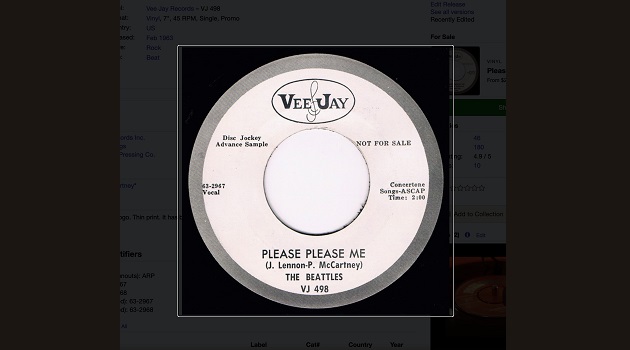
Cell phones are a big deal but to some of us the transistor was an even bigger deal. I was disobeying my parents staying up late (school night) in my bedroom listening to clear channel WLS in Chicago over a transistor radio. I was listening when Dick Biondi became the first DJ to play a Beatles song (“Please, Please Me”) February 7 or 8, 1963. Myth holds that Biondi mispronounced the group’s name.
Myth? Seems to me — I was listening — he called them the “Be-Att-Lees.” He had cause. The first US pressing of “Please Please Me” on the Vee-Jay label in February 1963, misspelled the Beatles’ name as “The Beattles.” Thanks to the transistor, a cultural revolution ensued. For the first time, young people could listen to music without parental approval.
Keith Richards first heard American black music with a transistor radio over the renegade, blacklisted Radio Luxembourg. In his memoir, Life, Richards wrote, “Radio Luxembourg was notoriously difficult to keep on station. I had a little aerial and I’d walk around the room, holding the radio up to my ear and twisting the dial … I’m supposed to be asleep. Like an explosion one night, listening to Radio Luxembourg on my little radio was ‘Heartbreak Hotel.’ I’d never heard it before, or anything like it. I’d never heard of Elvis before. It was almost as if I had been waiting for it to happen. When I woke up the next day, I was a different guy.”
Bell Labs invented the transistor in 1947. Soon radios used the transistor, and those early transistor radios were pure magic. Like today’s cell phones you could walk around with them. You weren’t chained to a wall by a power cord.
I bought my first transistor radio for $10, an Arvin with a leather cover that snapped over a large battery compartment. (Plastic had not ascended to dominance.) Many mornings I’d get up early and fire up that radio. Just having it was a thrill. I still have it.
Necessity is the mother of invention. Before the transistor, before portable, affordable radios made the scene, I built simple radios. You can praise today’s high-tech products all you want but a crystal radio from the 1950s holds its own. This simple radio had one moving part and it needed no power. Sure it only caught one or two stations and those would fade in and out, but it was a radio you built yourself. The heart of the radio was a simple crystal. A small piece of the mineral, galena, could somehow turn a radio signal into sound, and it needed no power. That’s about as green as you can get.
I’m working on a book that revolves around rock ‘n’ roll. The rise of many of today’s super bands began back in the early days of transistor radios, 45 RPMs, and jukeboxes. That history is pretty much lost on the casual youth who listen to music over new media such as Apple Music, Spotify (do not like that cutesy-pied name), Pandora, and others.
Neither are eight tracks and cassettes familiar to the young but it’s interesting to see how some of the younger set prize vinyl for its sound. They can hold a record in their hand and read the liner notes. I read that they like the nostalgia aspect but how can you be nostalgic over something you didn’t experience in its day? Kind of like missing a person you’ve never met.
Two media events stand out to me. I clearly recall the night I heard Dick Biondi play the first Beatles’s record just as I remember seeing Jack Ruby shoot Lee Harvey Oswald on A Sunday. Those two events — galaxies apart in so many ways — signaled a shift in the 1960’s culture. One good. One bad, coming out of a horrific presidential assassination as it did. You don’t forget moments like that, each a record in its own way, no pun intended.