

South Carolina’s Defining Challenge
By Tom Mullikin
Recent News reported that “South Carolina is officially the fastest-growing state in the nation, according to the latest data from the U.S. Census Bureau. Between July 2024 and July 2025, the Palmetto State’s population surged by 1.5 percent, outpacing every other state in the country.”
From the Upstate’s booming manufacturing corridor to the Lowcountry’s rapidly expanding coastal communities, growth is no longer a distant prospect. The secret of the beauty and vitality of S.C. is out and accelerating daily. New roads, ports, housing developments, and industrial investments promise jobs, prosperity, and opportunity. Yet alongside this progress lies a quieter, but equally urgent obligation. We need to find that difficult balance that will allow economic progress alongside protection of our natural resources.
S.C.’s Constitution has a clear mandate to protect our natural resources. Article XII Section 1 expressly provides that the “health, welfare, and safety of the lives and property of the people of this state and the conservation of its natural resources are matters of public concern.” Conservation is critical to our identity, economy, and quality of life.
Growth that is both rapid and uncoordinated places undeniable pressure on our natural resources. The tension between economic development and protection of our natural resources is not unique to S.C. As highlighted in recent research on resource management, governments around the world struggle to reconcile “immediate monetary benefits” with the “long-term repercussions” on natural resources. Infrastructure expansion, industrial growth, and population increases often drive resource consumption beyond sustainable limits, leading to degraded ecosystems and diminished resilience. In S.C. that impacts the very culture and unique beauty of our state. Many of our communities desperately need the economic development and infusion of financial resources to address historic issues with education, healthcare and meaningful opportunity for our families in these areas.
The question is not whether we should grow. Growth is inevitable and needed and if managed wisely will be very beneficial. The real question is how. Research shows sustainable development requires a “fundamental transformation” in how we measure success that integrates ecological well-being alongside economic indicators. In other words, growth that undermines natural systems is not true growth. It is deferred decline.
Under the leadership of Gov. McMaster and legislative leaders, S.C. has already recognized this reality. Investments in land conservation, water planning, and wildlife management demonstrate a commitment to balancing these priorities. The pace and scale of the current development demand a comprehensive approach.
To successfully meet this generational challenge we need consensus of vision and collaboration of resources. For decades, the United States has relied primarily on government and a system known as cooperative federalism to protect our natural resources. A simple but powerful idea: federal, state, and local governments working together, each bringing their strengths to bear. Today, that framework while still sound, is being tested in ways its architects may not have fully anticipated. Extreme weather events are growing more frequent and more severe. Hurricanes do not just pass through; they fundamentally alter landscapes. Floodwaters do not simply recede. They leave behind debris, riverbanks fallen and long-term ecological consequences. At the same time, S.C. continues to grow at an historic pace. More people, more development, and more infrastructure mean greater pressure on natural systems that are already under strain.
Local governments do not have the resources to address every river, every obstruction, every storm impact alone. State agencies have similar constraints. Federal programs also provide critical support, but they are often limited in scope and timing. The scale of the challenge has simply outgrown the capacity of any one level of government. But South Carolinians have shown remarkable tenacity to protect our beautiful state and our families.
We need to continue to encourage broader coordination and one that fully embraces collaboration not only across governments, but across sectors. The private sector must also be part of the solution. This is not a departure from our legal framework. It is a realization of it. Environmental laws have long recognized that private enterprise plays a role in both creating and solving environmental challenges. Businesses own land, manage infrastructure, and possess both technical expertise and financial capacity. They are not bystanders. They are stakeholders. And increasingly, they are partners.
Protection efforts depend on a combination of local leadership, state oversight, federal support, and private funding. Each piece is necessary. Remove one, and the effort falters. We can and will continue to go further. For example, our SCDNR SCORE program has recycled more than 609,000 bushels of oysters over 57 acres of new reef habitat, protecting 50 miles of shoreline and filtering 15 billion gallons of water daily. We need more support among all stakeholders to fully realize the tremendous value of this and other programs.
We are well-positioned to continue to lead in this space and serve as a global model. Our history of stewardship, our state agencies, and our growing network of regional collaborations provide a solid foundation.
The pressures on our beautiful Palmetto State are accelerating. What worked yesterday will not be enough tomorrow. A single logjam costing close to one million dollars is not an anomaly. It is a warning. It tells us that the economics of natural resource management are changing, and that collaboration is no longer just good policy. It is a fiscal necessity.
Theodore Roosevelt reminded us that “We do not inherit the earth from our ancestors; we borrow it from our children.” The data is clear: Our natural resources drive billions of dollars in economic impact; they support hundreds of thousands of jobs; and, they define who we are as a state. Our natural resources have always been key to our economic success.
Moving forward we should seek smart growth principles, including clustering development, preserving green space and brownfield redevelopment of abandoned industrial sites. These initiatives reduce environmental strain while maintaining economic momentum. Effective policy is not about halting development but guiding it.
By promoting investments to protect critical habitats, agriculture and forestry, the state can encourage development that strengthens and does not weaken our natural systems. In fact, studies have shown that protection of our unique natural resources can stimulate innovation, attract investment, and enhance economic resilience over time.
Our effort must involve the people of South Carolina at all levels. Communities are not passive observers; they are stakeholders whose lives and livelihoods are directly affected. Engaging local voices leads to better decisions, stronger public support, and more sustainable outcomes. As research emphasizes, stakeholder collaboration is essential to ensuring that economic and environmental goals are not treated as competing interests but as interconnected necessities.
As we find this important balance, we will continue to be the national model for how a growing state can honor both prosperity and preservation. S.C.’s future generations are counting on us to find the conviction to meet this great and complex challenge as “this is no time to engage in the luxury of cooling off or to take the tranquilizing drug of gradualism.”
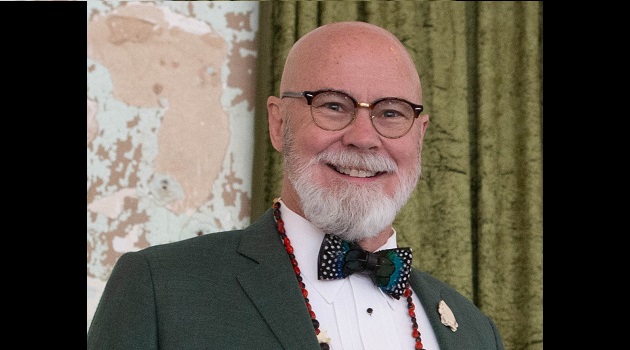
– Dr. Tom Mullikin is the director of the S.C. Department of Natural Resources. An acclaimed global expedition leader, attorney, documentary film producer, former U.S. Army officer and retired commanding general of the S.C. State Guard, Mullikin served as the founding chair of the gubernatorially established S.C. Floodwater Commission. He has led the 1,100-plus S.C. Department of Natural Resources since early February 2025.